| Serie | Guide to the Butterflies of the Palearctic Region |
| Auteurs | V. Sbordoni, D. Cesaroni, J. G. Coutsis & G. C. Bozano. |
| Taal | Engels |
| ISBN | 9788887989229 |
| Uitgever | Omnes Artes |
| Pagina's | 143 |
| Formaat | 297 x 210 mm |
| Bindwijze | Paperback |
| Afbeeldingen | Tekeningen, foto's, kaarten in z/w en kleur |
| Jaar van uitgave | 2018 |
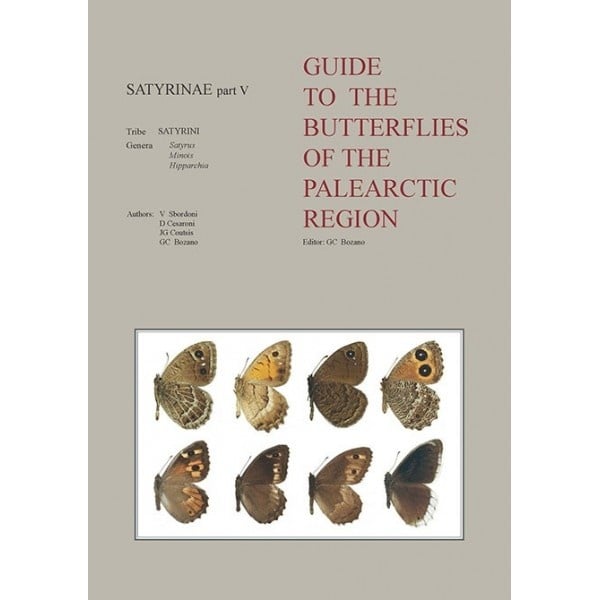
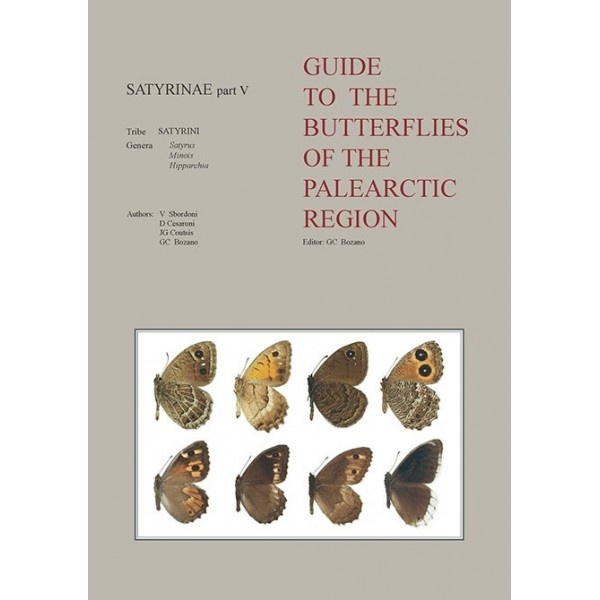
This volume, the twentieth of the series Guide to the Butterflies of the Palearctic Region and the fifth about the Satyrinae subfamily, deals with three genera in the tribe Satyrini: Satyrus, Minois, and Hipparchia. They are widely distributed in the Palearctic region, quite popular and the object of much attention among lepidopterologists. However, despite the very rich dedicated literature, these butterflies, and in particular Hipparchia and Satyrus, maintain large areas of taxonomic ambiguity. Distinguished scientists used the term "bad species" to characterize species of the genus Hipparchia as taxonomic units that do not conform to criteria used to delimit species.
To a broad critical look, these butterflies seem to show an excess of taxonomic over-splitting. The analysis of DNA barcode sequences, based on the mitochondrial gene COI, that in other lepidopterans provided valuable taxonomic suggestions, has not shown particular utility in these two genera and in Minois as well. The authors made an effort to gather the available evidence to outline a taxonomic revision in line with a biological species concept. Based on previous work, the authors have already tested the strength of the multidimensional approach; therefore, also for this issue, they integrated all accessible data on genetics and genitalia morphology, many of which were still unpublished.
About the 'Guide to the Butterflies of the Palearctic Region' series
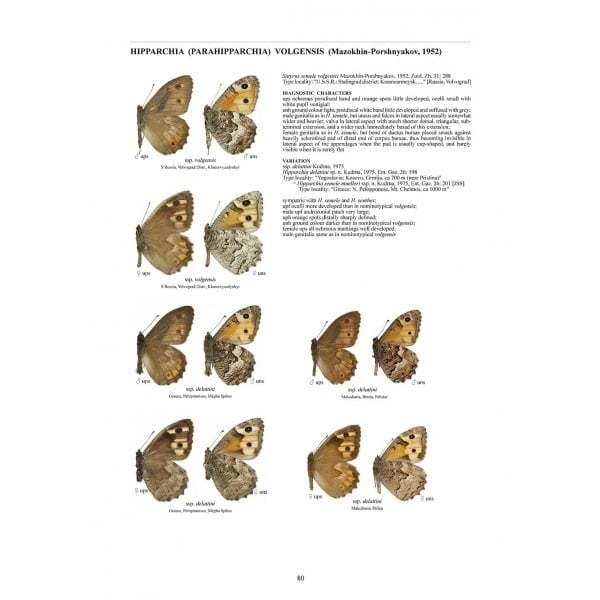
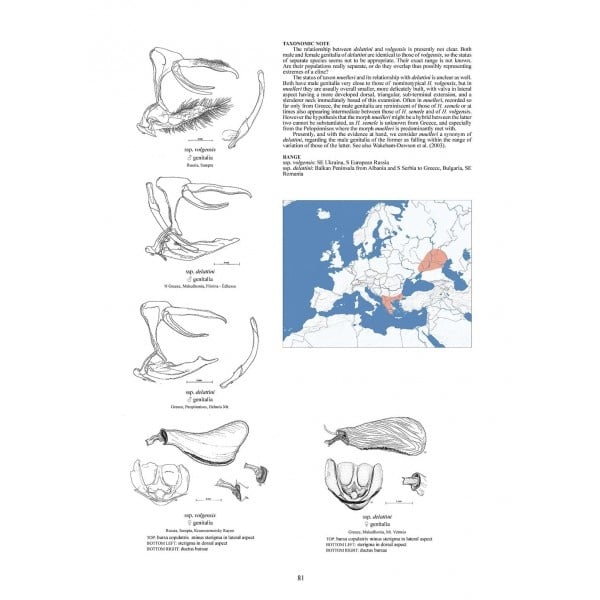
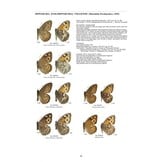
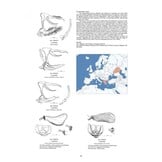
This is a series about the butterflies of the whole Palearctic, from North Africa and Europe to China and Japan. Each volume of the series will cover 80-100 species with full colour illustrations, genitalia drawings, distribution, taxonomy, variations and diagnostic characters. Many well-known lepidopterists worldwide are contributing to this project, with the final result being a series of booklets with each one covering a subfamily, a tribe or a group of genera with a total of 50 to 100 species. It is anticipated that, when completed, this series will comprise over 30 volumes of work covering the Satyridae, Papilionidae, Pieridae, Nymphalidae, Lycaenidae, Hesperidae, and other families.