
All categories
Fieldwork
Nest Boxes
Garden Items
Books
Education
Gift items
Second chance
New
Deals
Repairs


Close
A nest box is a simple way to help birds and support biodiversity in your local environment. As old trees, natural cavities and suitable nesting sites in buildings disappear, some bird species have fewer places to breed. Species such as great tits, blue tits and house sparrows depend on these sheltered nesting sites. A nest box provides an alternative place to breed, raise their young or shelter. It also allows you to observe birds' nesting behaviour up close.
A nest box is particularly beneficial as part of a bird-friendly environment when sufficient food, water and natural shelter are also available.
The most suitable nest box depends on the bird species you want to help. Different bird species have different nesting requirements. The dimensions, shape, entrance hole and location all influence which birds will use a nest box.
Hole-nesting birds benefit particularly from nest boxes. These are birds that naturally nest in tree cavities or other sheltered spaces. Examples include great tits, blue tits, Eurasian nuthatches, starlings, spotted flycatchers and house sparrows. Species that nest in semi-open cavities, such as European robins and white wagtails, also use specially designed open-fronted nest boxes.
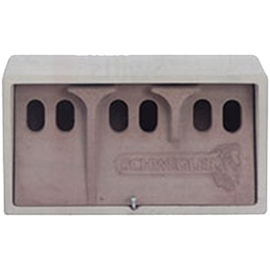
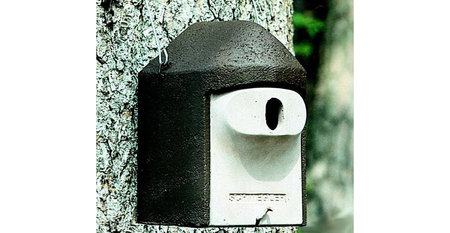
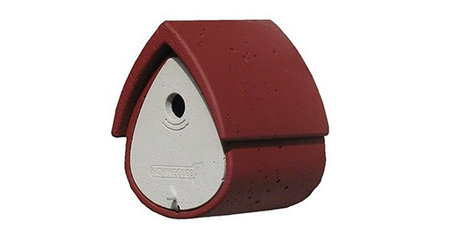
The best nest box for your garden depends on the bird species you want to attract and the layout of your surroundings. Nest boxes for tits, for example, are suitable for great tits and blue tits, while starling boxes and sparrow terraces attract other species. Open-fronted nest boxes are suitable for European robins and white wagtails.
By providing different types of nest boxes, you can create nesting opportunities for several bird species. Consider the available space, vegetation and the presence of food and shelter.
You can also choose between different materials, such as wood and wood-concrete. Wood-concrete nest boxes generally have a longer lifespan and provide good insulation. This makes them highly resistant to different weather conditions.
You can put up a nest box at any time of the year. However, autumn is considered a particularly suitable time. Birds can discover the nest box in advance and use it as a shelter or roosting place during cold nights. This ensures that the nest box is available in time for the breeding season in spring.
Ideally, do not wait until the breeding season begins. This gives birds enough time to become familiar with their new nesting site.
Hang a nest box in a quiet, sheltered location where birds are disturbed as little as possible. The ideal mounting height depends on the bird species. For most tit nest boxes, a height of 2 to 3 metres is suitable. Starling boxes are generally hung at a height of 2 to 5 metres. Open-fronted nest boxes for species such as European robins can be placed lower, provided the location is sufficiently sheltered.
Make sure the entrance is easily accessible and preferably does not face southwest. This helps protect the nest box from driving rain and strong winds. Also consider cats and other potential predators.
Can you hang several nest boxes close together?
Yes, you can hang several nest boxes in the same garden or area. When placing nest boxes for the same bird species, maintain sufficient distance to reduce competition for food and territory. A distance of at least 10 metres is often recommended between tit nest boxes. Nest boxes for different bird species can generally be placed closer together.
What if a nest box is not being used?
An empty nest box does not necessarily mean that something is wrong. Birds sometimes simply need time to discover a new nesting site. Check whether the nest box is in a quiet location, whether the entrance is suitable for the bird species in your area and whether sufficient food, water and shelter are available.
If a nest box has remained unused for two breeding seasons, it may help to move it to another location. Observe which birds regularly visit your garden or balcony and choose a nest box that suits their needs. The right combination of location, nest box type and suitable surroundings will increase the chances of attracting new occupants.
The diameter and shape of the entrance hole partly determine which bird species can use a nest box. Common entrance hole diameters are 28 mm for blue tits, 32 mm for great tits and approximately 45 mm for starlings. Species such as European robins and white wagtails prefer open-fronted nest boxes with a larger, open entrance.
Choosing a nest box with the correct entrance hole increases the chances of attracting the bird species you want to support. The ideal dimensions vary depending on the bird species and may also depend on the design of the nest box and its location.
Yes, nest boxes can serve a purpose throughout the year. In spring and summer, they are mainly used as nesting sites where birds lay their eggs and raise their young. In autumn and winter, some birds use nest boxes as roosting places or shelter from cold, wet and windy conditions.
By leaving nest boxes up all year round, these facilities remain available to birds. Birds can also discover suitable nesting sites during winter in preparation for the following breeding season.
It is advisable to clean nest boxes once a year, preferably in autumn after the breeding season has ended. Remove old nesting material and any parasites. Do not use cleaning products; simply brushing the box dry is sufficient.
Before cleaning, check that no birds or other animals are still inside. Regularly cleaning nest boxes prevents old nesting material from accumulating and helps keep the box suitable for the next breeding season.
Many bird nest boxes can be shipped in a standard parcel box. Our regular shipping rates apply. You can find these on our Delivery times and shipping costs page.
For larger quantities or heavier nest boxes, we use pallet delivery. This helps ensure that the nest boxes arrive safely and undamaged. The product page for each nest box specifies the order quantity from which pallet shipping applies.
Find the order you'd like to withdraw
Enter your email address and order number.
Check your mailbox
If your details match an order, you'll receive an email with a link to view and manage it.