Customer Support
0
Close

Categories

Filters

    Hand Detectors

    Handheld bat detectors for active bat detection and field research. Explore bat detectors using heterodyne, frequency division, time expansion and full-spectrum technology to detect, listen to and analyse bat calls. Show more

    Brands

    Bat Detector Type

    Price

    -
    16 Products
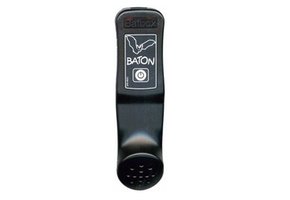
    Batbox Baton Bat Detector

    Batbox Baton Bat Detector

    The Baton is a frequency division detector. The ...
    €109,99
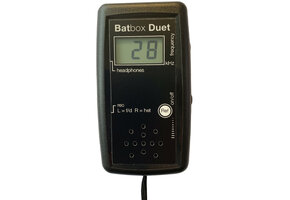
    Batbox Duet Bat Detector

    Batbox Duet Bat Detector

    With the Duet Bat Detector you can identify bats...
    €388,-
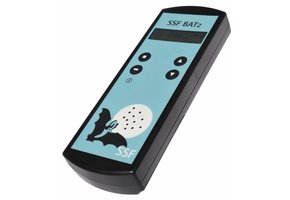
    SSF Bat2 Detector

    SSF Bat2 Detector

    The SSF Bat2 Detector is a handy heterodyne bat ...
    €364,52
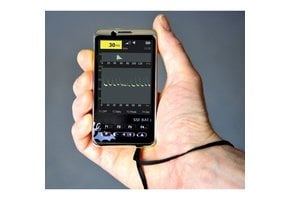
    SSF Bat3 Detector

    SSF Bat3 Detector

    The SSF Bat 3 is a compact heterodyne detector w...
    €515,03
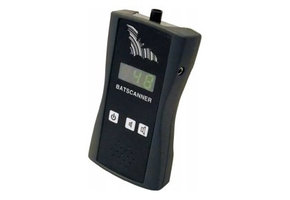
    Elekon Batscanner

    Elekon Batscanner

    Turn on and listen - that's all. The ultrasonic ...
    €310,-
    Elekon Batscanner Stereo

    Elekon Batscanner Stereo

    The Batscanner Stereo is easy to use. Ultrasonic...
    €379,-
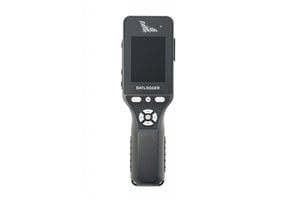
    Elekon Batlogger M2

    Elekon Batlogger M2

    The Batlogger M2 is the newest mobile bat detect...
    €1.494,-
    Elekon Batlogger M

    Elekon Batlogger M

    The Batlogger M is a system for recording bat ca...
    €2.080,-
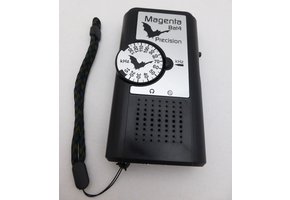
    Magenta Bat4 Bat Detector

    Magenta Bat4 Bat Detector

    The Bat4 Bat Detector is the simplest detector o...
    €101,24
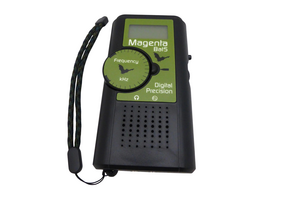
    Magenta Bat5 Bat Detector

    Magenta Bat5 Bat Detector

    The Bat5 Bat Detector is a high quality budget b...
    €146,05
    Pettersson D200 Bat Detector

    Pettersson D200 Bat Detector

    Small and low weight heterodyne detector with ba...
    €315,-
    Pettersson D230 Bat Detector

    Pettersson D230 Bat Detector

    The Pettersson D230 bat detector is a combined h...
    €475,-
    Pettersson D240x Bat Detector

    Pettersson D240x Bat Detector

    Very popular heterodyne and time expansion detec...
    €1.004,-
    Anabat Scout

    Anabat Scout

    The Anabat Scout is the newest bat detector from...
    €1.111,-
    Anabat Walkabout

    Anabat Walkabout

    The Anabat Walkabout is a state of the art detec...
    €1.954,-
    Ultrasonic Microphone Test

    Ultrasonic Microphone Test

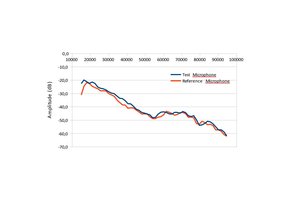
    Have your ultrasound microphones tested at Velds...
    €39,-
    What is a handheld bat detector and how does it work?

    A handheld bat detector is a portable device that can detect and make ultrasonic bat calls audible and, with some models, also record them. Bats produce sounds that are generally beyond the range of human hearing. A bat detector picks up these ultrasonic signals and converts them into sounds that humans can hear. Depending on the model, this is done using technologies such as heterodyne, frequency division, time expansion or full-spectrum.
     
    A bat detector can be used during fieldwork to locate bats and use their echolocation calls to help identify and distinguish species. Some detectors can also record the calls, allowing you to listen to and analyse them in more detail later. For reliable species identification, factors such as behaviour, habitat and geographical distribution should also be taken into account.
     
    Which bat detector is suitable for beginners?

    For beginners, a simple handheld detector with straightforward controls is often a good choice. Models such as the Magenta Bat4 and Magenta Bat5 offer an accessible introduction to listening for bats. The best choice depends on factors such as the preferred detection method and available budget.
     
    Which handheld detector is suitable for professional bat research?

    For professional fieldwork, a more advanced handheld detector can be useful, particularly when bat calls need to be recorded and analysed in greater detail. We offer various models with advanced features for active bat monitoring, including the Pettersson D240x, Anabat Scout, Anabat Walkabout, Elekon Batlogger M and Elekon Batlogger M2. The most suitable model depends on factors such as the desired recording quality, analysis capabilities and your specific fieldwork requirements.
     
    Not sure which device is right for your application? We have created a practical selection guide that takes you step by step towards the ideal bat detector for your needs. You can find this page here.
     
    What is the difference between heterodyne and full-spectrum bat detectors?

    Heterodyne and full-spectrum are two different technologies used to make ultrasonic bat calls audible and to record them. With heterodyne technology, you tune the detector to a specific frequency. The signal is then converted directly into a sound that humans can hear. This makes heterodyne particularly useful for quickly detecting bats in the field and listening to their calls in real time. The technology is relatively straightforward to use and can help distinguish species based on their characteristic calls.
     
    A full-spectrum bat detector records a much broader range of ultrasonic sound and can often save these signals as recordings. This preserves more information from the original bat call, allowing recordings to be reviewed and analysed later using suitable software. This is particularly useful for research, species identification and situations where calls need to be compared in greater detail.
     
    In short: heterodyne is ideal for direct, active listening in the field, while full-spectrum offers more possibilities for recording, analysis and detailed identification of bat calls. The best technology depends on your application, experience and how extensively you want to analyse bat calls afterwards.
     
    What is the difference between a hand detector and a standalone detector?

    A handheld bat detector is designed for active bat detection. You take the detector with you during fieldwork and use it to locate bats, listen to their calls in real time and, depending on the model, record them. Because you operate the detector yourself, you can actively search for bats and investigate different locations, flight routes or habitats. Handheld detectors are therefore particularly suitable for bat surveys, species identification and active fieldwork.
     
    A standalone bat detector, on the other hand, is designed for passive and often long-term monitoring. You place the detector at a fixed location and leave it to automatically detect and record bat calls for a specified period. This allows you to collect data during the night or over extended periods without having to be present. Standalone detectors are therefore useful for monitoring roosts, flight routes, foraging areas or other research locations.
     
    The main difference is therefore how the equipment is used: with a handheld detector, you actively search for bats, while a standalone detector monitors a fixed location automatically. For some research projects, the two systems can complement each other well: a handheld detector for targeted fieldwork and a standalone detector for long-term monitoring.
     
    When choosing between them, consider your research objectives, the desired monitoring period, whether the equipment needs to be left unattended, and whether you primarily want to listen live or collect acoustic data over a longer period.
     
    Looking for our range of standalone bat detectors? Click here.