
Customer Support
0
Close

Categories

Filters

    Geophones

    Geophones for recording vibrations and sounds in soil and other materials. For field surveys, soil investigation, and bioacoustics. Show more

    Brands

    Price

    -
    3 Products
    Geophone

    Geophone

    Hand-made Spanish high sensitivity Omnidirectional Geophone for Field Recording with XLR-connector.

    € 228,69
    Elekon Allsounder Aliso

    Elekon Allsounder Aliso

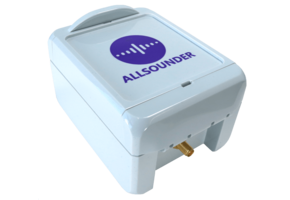
    The Elekon Allsounder Aliso is a static recording device for the soil. With the Allsounder Aliso, you can listen live to what is happening in the soil. The device is functional and easy to use with the Allsounder Control App.

    € 898,-
    Manalive Geophone XLR or Mini Jack

    Manalive Geophone XLR or Mini Jack

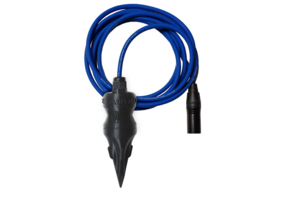
    The Manalive Geophone XLR or Mini Jack records extreme low-frequency sounds up to 5 Hz. This is a handmade Geophone microphone with 3D printed case and extremely sensitive capsule.

    € 165,-
    What is a geophone and what is it used for?

    A geophone is a sensor that detects vibrations travelling through the ground or other solid materials. The sensor converts these vibrations into an electrical signal that can be monitored or recorded using suitable audio equipment.
     
    Unlike a conventional microphone, which primarily detects sound waves travelling through the air, a geophone is designed to detect vibrations in, for example, the ground and other solid materials. This makes it possible to investigate sounds and vibrations that are difficult or impossible to detect with a conventional microphone.
     
    Geophones are used for applications including ground monitoring, bioacoustic research, field recording, sound design and experimental audio recording. They can, for example, be used to capture low-frequency vibrations and make sounds from the ground audible.
     
    Veldshop offers both standalone geophones for use with external recording equipment and complete systems for ground monitoring.
     
    Which geophone is suitable for my application?

    The most suitable geophone depends on the intended application, the desired frequency range and the available recording equipment.
     
    Manalive Geophone XLR or Mini Jack: suitable for recording very low frequencies, infrabass, sounds from below the ground and experimental audio recordings. The geophone has a frequency range of 5 Hz to 5 kHz and is available with an XLR or Mini Jack connection.
    Tremor Labs Xeofón: a highly sensitive geophone for field recording, low-frequency audio recording and detecting vibrations in the ground and other materials. The Xeofón has a frequency response of 10 to 1000+ Hz and an XLR connection.
    Elekon Allsounder Aliso: suitable for standalone ground monitoring when a complete recording device is required. The Aliso offers features including live monitoring, scheduled recordings, microSD storage and control via the Allsounder Control App.
     
    The Manalive and Xeofón are standalone geophones that can be used with external audio equipment. The Elekon Allsounder Aliso is a complete system for ground monitoring and recording.
     
    Can a geophone be used to hear sounds from underground?

    Yes. A geophone detects vibrations travelling through the ground and converts them into an electrical audio signal. With suitable audio equipment, this signal can then be monitored or recorded.
     
    A geophone therefore makes it possible to hear vibrations and sounds from below the ground that are difficult or impossible to detect with a conventional microphone. The Tremor Labs Xeofón, for example, is designed for low-frequency and experimental audio recording. Detecting life beneath sand and other ground surfaces is also mentioned as a possible application.
     
    The Manalive Geophone is suitable for investigating very low frequencies and recording sounds and textures from below the ground, for example for sound design. The sensor detects frequencies from 5 Hz.
     
    For long-term or standalone ground monitoring, the Elekon Allsounder Aliso provides a complete system with live monitoring, scheduled recordings and storage on a microSD card.
     
    Do I need a recorder for a geophone?

    This depends on the type of geophone being used. A standalone geophone detects vibrations and converts them into an electrical audio signal. To monitor or record this signal, suitable audio equipment is generally required, such as a recorder, audio interface or amplifier with the appropriate input.
     
    The connection type and output level of the geophone should be taken into account. Some geophones have an XLR connection and can be connected to professional recording equipment. Other models, for example, have a Mini Jack connection and are designed for use with equipment featuring a suitable microphone input.
     
    A standalone geophone is therefore not necessarily a complete recording system. The Manalive Geophone and Tremor Labs Xeofón require additional audio equipment to amplify, monitor or record the signal. The Elekon Allsounder Aliso, on the other hand, is a complete system with the sensor, recorder and required electronics integrated into one device.
     
    What is the difference between a geophone and a hydrophone?

    A geophone and a hydrophone are both sensors used to detect sound and vibrations, but they are designed for different environments.
     
    A geophone is designed to detect vibrations in the ground and other solid materials. It can be used to investigate, for example, vibrations in the soil, sounds from below the ground and low-frequency movement.
     
    A hydrophone is specifically designed to detect sound underwater. A hydrophone measures pressure changes travelling through water, whereas a geophone detects mechanical vibrations in the ground or another solid material.
     
    A geophone is used for vibrations in the ground or other solid materials, while a hydrophone is used for underwater sound. Although both sensors can detect signals that are difficult to pick up with a conventional air microphone, their construction and applications are significantly different.