
Customer Support
0
Close

Categories

Filters

    Magnifiers

    Magnifiers come in various sizes, magnifications, and lighting options. They magnify small details and are ideal for nature research, education, or inspection. Show more

    Brands

    Price

    -
    38 Products
    DIPLE Lux

    DIPLE Lux

    DIPLE Lux is the perfect solution to observe opa...
    £48.32
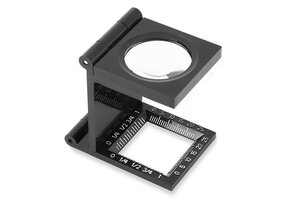
    Carson Sewing Loupe Foldable

    Carson Sewing Loupe Foldable

    This Carson Sewing Loupe is a foldable standing ...
    £7.82
    Carson Sewing Loupe Foldable with LED

    Carson Sewing Loupe Foldable with LED

    This Carson Sewing Loupe With LED is a foldable ...
    £12.22
    Bugdorm DP0240 Magnifying Insect Viewer
    £6.11
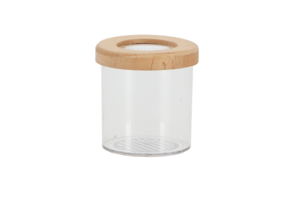
    Byomic Magnifying Pot 2x45mm
    £3.57
    Magnifying pot for insects

    Magnifying pot for insects

    With this magnifying glass, insects, water creat...
    £3.98
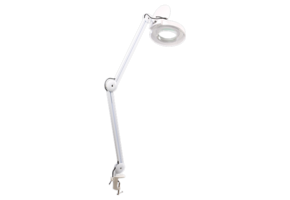
    Konus Table Magnifier Flexo-120

    Konus Table Magnifier Flexo-120

    The Konus Table Magnifier Flexo-120 is a multifu...
    £33.18
    Byomic Table Magnifier v2 with Clamb LED
    £59.41
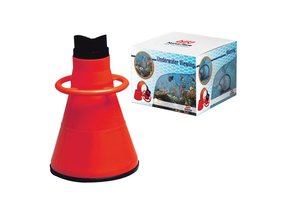
    Nuova Rade Aquascope - mini

    Nuova Rade Aquascope - mini

    With this small Aquascope you can watch underwat...
    £32.16
    Nuova Rade Aquascope

    Nuova Rade Aquascope

    With the Aquascope you can watch underwater from...
    £66.62

    Magnification indicates how much closer an object appears. A magnifier with 10x magnification makes an object appear 10 times larger than with the naked eye. A magnifier with 20x magnification therefore magnifies an object twice as much as a 10x magnifier. However, a magnifier with 20x magnification often has a smaller field of view and more distortion.

    For field observations of plants, insects, or fungi, magnifiers with 10x to 20x magnification are ideal. A 10x triplet magnifier is popular due to its sharp image quality and minimal distortion. For detecting insects or small details, 20x is recommended. The table below can be used as a guide. However, the final decision remains entirely dependent on personal preference.
     
    Application + DescriptionRecommended MagnificationIs LED Useful?Is UV Useful?
    Insect research in the field (For identifying small insects, beetles, or larvae in situ)10x – 20xYesOccasionally
    Plant and leaf research (For examining veins, structures, or damage on leaves and stems)8x – 15xYesNo
    Mushrooms and lichens (For inspecting spores, textures, or color changes on fungi and mosses)10x – 20xYesOccasionally
    Mineral and rock research (For examining crystal structures, luster, or fracture lines in rocks and minerals)10x – 20xYesYes
    Ecological fieldwork (general) (General use by ecologists for species identification, damage patterns, or spores in the field)10xYesOccasionally
    Educational use / schools (Magnifiers for nature education, demonstrations, and field lessons for pupils or students)5x – 10xYesNo
    Plant disease inspection (For detecting mites, fungi, rust, or other infestations on leaves or crops)15x – 20xYesYes
    Entomological or laboratory research (For closely examining body parts, wings, or pigmentation in insects)15x – 30xYesYes
    UV detection (For example, for fungi, minerals, or fluorescent spores; aimed at specific research objectives)10x – 20xOccasionallyYes
    Technical inspection or detail work (For inspecting electronics, textiles, precision mechanics, or printing)10x – 30xYesNo

    There are different types of magnifiers. You can choose a magnifier without illumination, but you can also choose one with LED lighting. A magnifier with LED lighting provides extra clarity in low light or in dark places (such as shady areas). Magnifiers without LED are often more compact and lighter, but are therefore less suitable in twilight or cloudy conditions. For fieldwork, a magnifier with LED can be a practical addition.

    A magnifier with UV light can be useful for detecting organisms or substances that fluoresce. These include fungi, minerals, or insect spores. These UV magnifiers are ideal for specialists in biology, ecology, or entomology.
     
    Veldshop also offers magnifiers with UV and LED. This allows you to use your magnifier in dark places and simultaneously detect fungi and other spores.

    Magnifiers have many designations. The four most important ones are listed above and are: folding magnifier, standing loupe, doublet, and triplet. But what do these designations mean? Below, we will briefly explain these four topics.
     
    Folding Magnifier: A Folding Magnifier is foldable and compact. This compactness makes it convenient for field use.
    Standing Loupe: A Standing Loupe is placed on an object or surface. This is often done in combination with a stand/tripod.
    Doublet: A doublet is a magnifier with two lens elements. Because it has two lens elements, it provides better image quality.
    Triplet: A triplet is a magnifier with three lens elements. This provides a clear, sharp, and colorful image. A triplet is often brighter and sharper than a doublet. A triplet is often the best choice for precision work.

    Recently viewed