Customer Support
0
Close

Categories

Filters

    Audio Recorders

    Audio recorders for nature research, fieldwork, and monitoring. From compact recorders to professional bioacoustic systems for long-term use. Show more

    Brands

    Bat Detector Type

    Price

    -
    22 Products
    BirdWeather PUC

    BirdWeather PUC

    The BirdWeather PUC unlocks the sounds of nature...
    €269,-
    Song Meter Micro 2

    Song Meter Micro 2

    The new Song Meter Micro 2 offers an impressive ...
    €174,-
    Haikubox

    Haikubox

    Haikubox ensures that you never miss a bird in y...
    €277,-
    € 580,-
    € 536,50
    Song Meter Mini 2 AA

    Song Meter Mini 2 AA

    The Song Meter Mini 2 AA is the updated compact...
    €536,50
    Song Meter Mini 2 Li-ion

    Song Meter Mini 2 Li-ion

    The Song Meter Mini 2 Li-ion is the updated comp...
    €699,-
    Song Meter SM4TS

    Song Meter SM4TS

    Pinpoint vocalizing animal locations with the SM...
    €1.219,-
    Song Meter SM5

    Song Meter SM5

    Available from March 2026: The SM5 is a top reco...
    €895,59
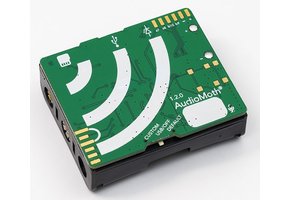
    AudioMoth

    AudioMoth

    The AudioMoth is a small compact stand-alone aud...
    €133,87
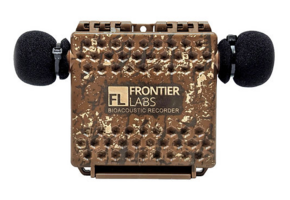
    Frontier Labs BAR-V2 Bioacoustic Recorder
    €430,-
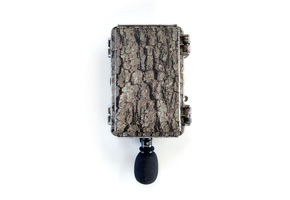
    Frontier Labs BAR-LT Bioacoustic Recorder
    €812,-
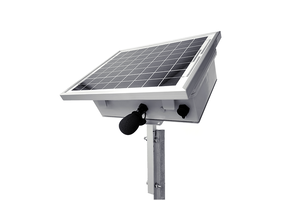
    Frontier Labs Solar BAR Bioacoustic Recorder
    €1.074,-
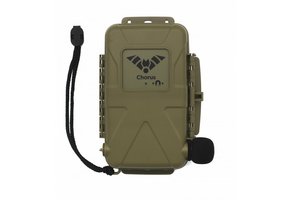
    Titley Chorus

    Titley Chorus

    The Chorus is an easy-to-use stand-alone acousti...
    €653,-
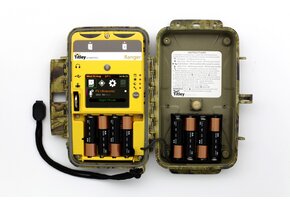
    Titley Ranger

    Titley Ranger

    The Ranger is the only field recorder you will n...
    €1.409,-
    HydroMoth

    HydroMoth

    The HydroMoth is a low-cost acoustic recorder fo...
    €218,11
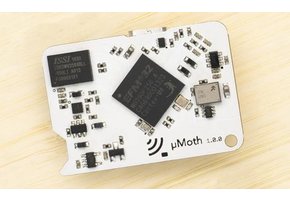
    μMoth

    μMoth

    μMoth is the worlds smallest full-spectrum acous...
    €174,99
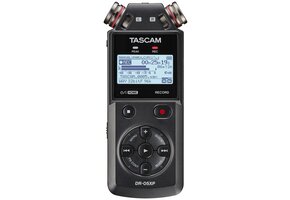
    Tascam DR-05XP Audio recorder

    Tascam DR-05XP Audio recorder

    DR-05XP Audio recorder is the successor of the D...
    €124,95
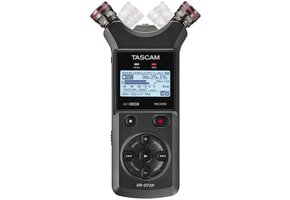
    Tascam DR-07XP Audio recorder

    Tascam DR-07XP Audio recorder

    The DR-07XP Audio Recorder is the ideal professi...
    €189,99
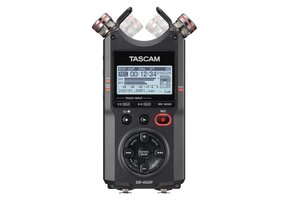
    Tascam DR-40X Audio Recorder

    Tascam DR-40X Audio Recorder

    The DR-40X Audio Recorder is a versatile four-tr...
    €199,99
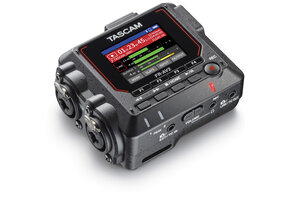
    Tascam FR-AV2 Audio recorder

    Tascam FR-AV2 Audio recorder

    A professional compact 2-channel audio recorder ...
    €424,99
    Tascam FR-AV4 Audio recorder

    Tascam FR-AV4 Audio recorder

    A professional, 4-channel audio recorder that co...
    €915,12
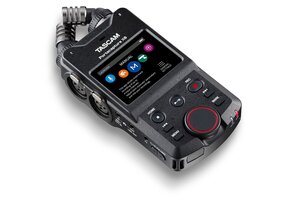
    Tascam Portacapture X6

    Tascam Portacapture X6

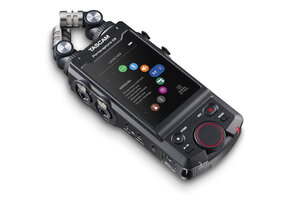
    The Portacapture X6 is a new-generation high-res...
    €349,-
    Tascam Portacapture X8

    Tascam Portacapture X8

    The Portacapture X8 is a new-generation high-res...
    €475,-
    What is an audio recorder and what is it used for?

    An audio recorder is a device that records sound and stores it in digital audio files. Audio recorders are used for a variety of applications, such as nature and wildlife monitoring, field research, and other purposes in, for example, the multimedia world. Depending on the type of audio recorder, the recording quality, battery life, and features vary.
     
    What types of audio recorders are there and which audio recorder best suits my application?

    Audio recorders are devices that capture sound and store it as digital audio files. They are used for a variety of applications, ranging from ecological fieldwork to nature recordings and long-term bioacoustic monitoring. The most suitable audio recorder depends on factors such as operating time, environment, desired sound quality, autonomy, and the type of research or recording you intend to conduct.
     
    Handheld Audio Recorders
    Handheld audio recorders are compact, portable recorders that are operated directly by the user. They usually have built-in stereo microphones and connections for external microphones. In ecological applications, they are often used for manual nature recordings, capturing bird song during surveys, and fieldwork. They are also ideal for music, film, and video productions.
     
    Products in this category:
    Compact Bioacoustic Audio Recorders
    Compact bioacoustic audio recorders are specifically designed for autonomous nature recording and ecological monitoring. They are small, energy-efficient, and can be programmed to automatically record at set times. These recorders have a low noise level and are suitable for long-term use without the need for a user to be present. They are widely used for monitoring birds, insects, and other wildlife.
     
    Products in this category:
    Larger Bioacoustic Field Rrecorders
    Larger bioacoustic field recorders are designed for very long-term field use. They often support external microphones, have more battery and storage capacity, and are suitable for monitoring over weeks to months. These recorders are used in large-scale research projects and in remote areas.
     
    Products in this category:
    Applications
    There are many audio recorders available. How do I know which one is suitable for my application? Below are a few applications, each with a product that matches it.
    These are just a few examples from a wide range of applications. Want to be sure your application is compatible with your desired audio recorder? Don't hesitate to contact Veldshop (via chat, email, or phone).

     
    How do sample rate, bit depth, microphone quality, and noise level affect sound quality?

    The sound quality of an audio recorder is determined by a combination of sample rate, bit depth, amplifier quality, microphone quality, and noise level.
    • Sample rate determines which frequencies can be captured; higher sample rates are necessary for bird and ultrasonic recordings. For acoustic recordings, 48 ​​kHz is sufficient; for bats, a minimum sample rate of 192 kHz is recommended.
    • Bit depth determines the dynamic range and level of detail of the recording. Standalone recorders usually have a bit depth of 16-bit. For higher-quality recordings that can be amplified later, a bit depth of 24-bit is recommended.
    • Microphone quality determines how faithfully and sensitively the sound is captured.
    • Noise level is crucial for soft sounds; the lower the noise, the better subtle details remain audible.
    Higher sample rates and higher bit depths result in larger audio files. This means an SD card fills up faster and batteries drain faster.
     
    For nature recordings and scientific research, low self-noise combined with a suitable sample rate is essential. If you know which application and audio recorder you plan to use, carefully check whether these characteristics align with your intended use.
     
    What is the difference between stereo and mono recording on audio recorders?

    When choosing an audio recorder, it's important to understand how stereo and mono recordings work, their role in different applications (such as bird calls, nature recordings, or ultrasound), and which recorders support these recording formats. A mono recording uses one channel, while a stereo recording uses two channels.
     
    What is stereo recording? (2 channels)
    Stereo recording captures sound through two separate channels, one on the left and one on the right. This can create a more spacious, wider (width can depend greatly on microphone configurations), and natural soundstage.
    • Bird Sound and Song Recognition
    • Nature Recordings with Context
    • Music and Audio Productions
    Examples of stereo recorders
    These devices are equipped for two-channel stereo sound as standard or offer the option to configure stereo:
    What is mono recording? (1 channel)
    Mono recording uses a single recording channel. This makes them:
    • More efficient in storage
    • More energy-efficient
    • Easier to analyze during long monitoring periods
    Examples of mono recorders/configurable field recorders
    These models record sound via a single channel, are often more compact, operate energy-efficiently, and are ideal for long-term autonomous monitoring:
    When to choose which recording formats
    Choose stereo if you want to record a natural area as humans hear it, or when sound directionality and spatial analysis are important (e.g., in bird song studies). Choose mono if you're monitoring autonomously for long periods and energy and storage efficiency are a priority—for example, in large-scale bat or biodiversity monitoring. Some recorders are configurable and can operate in different modes.
     
    Can audio recorders record ultrasonic sounds and stereo, and what is the advantage?

    Some audio recorders can record both audible sounds in stereo and ultrasonic sounds above 20 kHz, such as bat echolocation. This is particularly useful for ecological research that monitors multiple species groups simultaneously, such as birds, bats, and other fauna, within a single recording environment.
     
    Not all recorders can handle this combination as standard. Often, a specific model or an external ultrasonic microphone is required to record both stereo and ultrasonic sounds.
     
    Audio recorders that can record both ultrasonic and stereo sounds
    • Song Meter SM5: Can be configured with both acoustic (audible) and ultrasonic microphones. This allows you to combine stereo recordings of audible sounds with ultrasonic bat recordings within a single recorder.
    • Titley Chorus: Supports stereo recording and can be expanded with an ultrasonic microphone, enabling combined monitoring of birds, bats, and ambient noise.
    • Titley Ranger: Suitable for high-quality stereo recording and expandable with ultrasonic microphones for bat research and broader wildlife monitoring.
    • Other products, such as the Tascam FR-AV2 and Tascam FR-AV4, can also record ultrasonic and stereo audio. This requires a Clippy Ultra XLR, for example.
    What are the advantages of both ultrasonic and stereo recording?
    Audio recorders that support both ultrasonic and stereo recording offer maximum flexibility for ecological research. They allow you to record multiple species groups and sound levels with a single system, making them particularly suitable for integrated and long-term monitoring projects.